What is a Con?
What’s in a Con?
Conventions and conferences, or cons, are one of the best places to meet writers, learn from the pros, and demystify an industry that can seem inaccessible and even otherworldly. But what makes a con a con? Below is a quick rundown of some of the standard components of conventions and conferences.
Panels
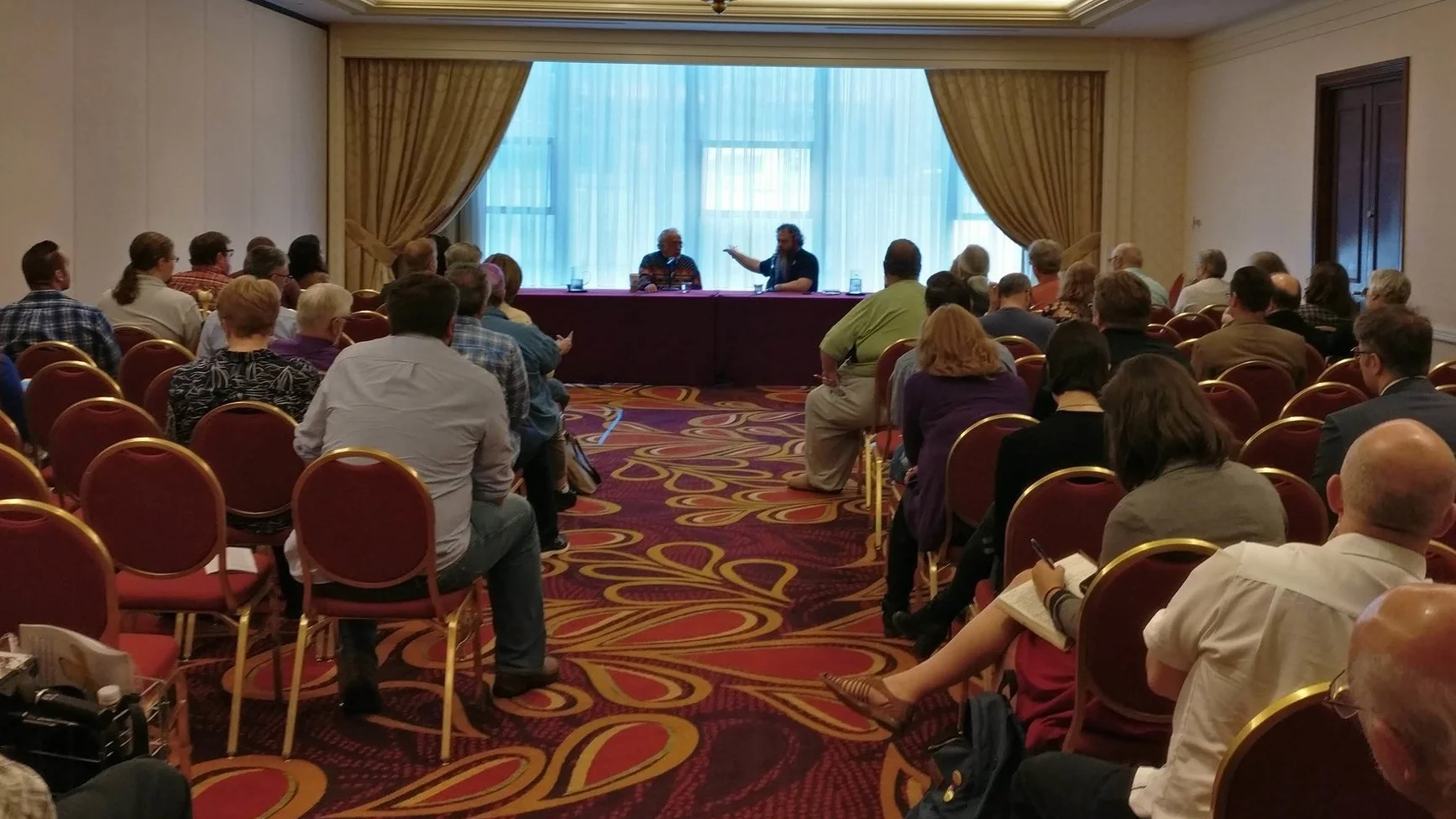
Cons typically involve panels, where a group of experts spend the better part of an hour discussing a predetermined topic. These panels make up most of the event’s programming taking place over the course of the day and often late into the night. Here are some example panel topics from this year’s Nebula Conference:
The Gentle Art of Cursing
Introduction to Publishing Contracts
Creating Stakes in Interactive Fiction
Now What? Emerging Writers Discuss Life After their Debut
The Future of Death
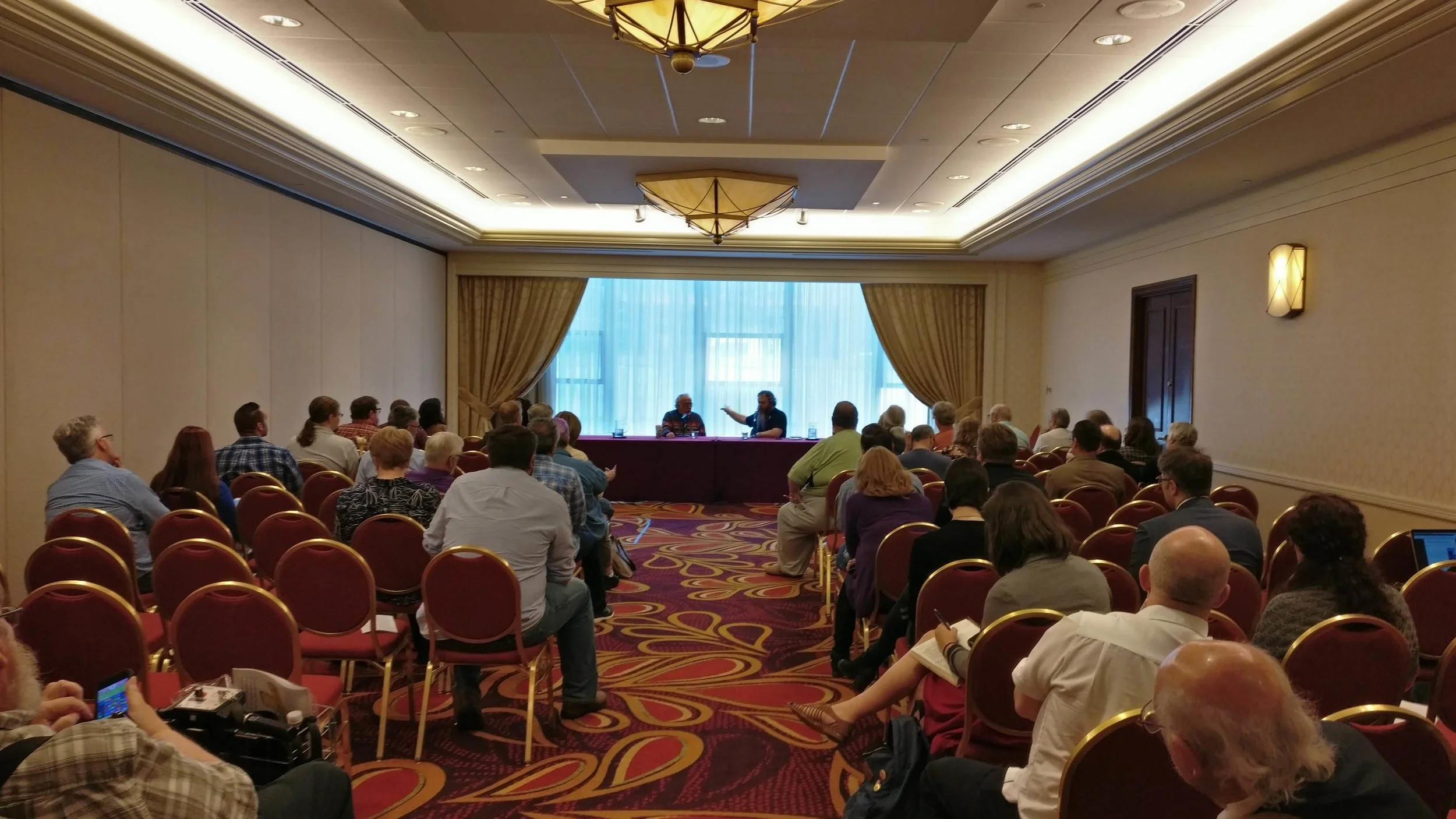
Peter S. Beagle and Patrick Rothfuss panel at the 2018 Nebula Conference in Pittsburgh
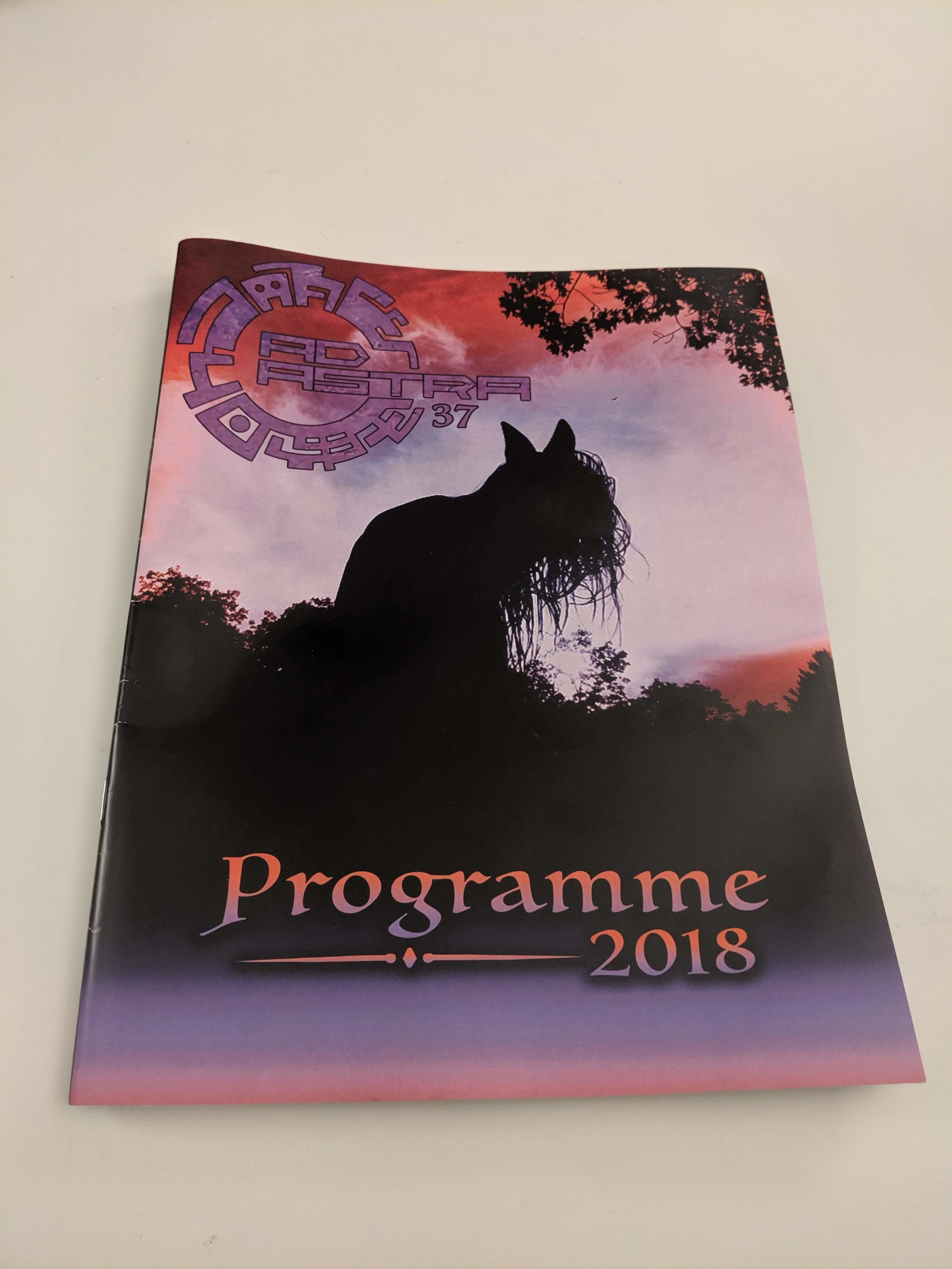
Program book or Schedule
The larger the convention is, the more panels will be going on at once. So how do you know where and when the panels are? Increasingly con schedules are being distributed using cell phone apps. Most of these apps allow you to highlight items that interest you so you can build a plan before the event occurs. Every once and a while though, a con will still give out a good old-fashioned program book.
ID Badges and ribbons
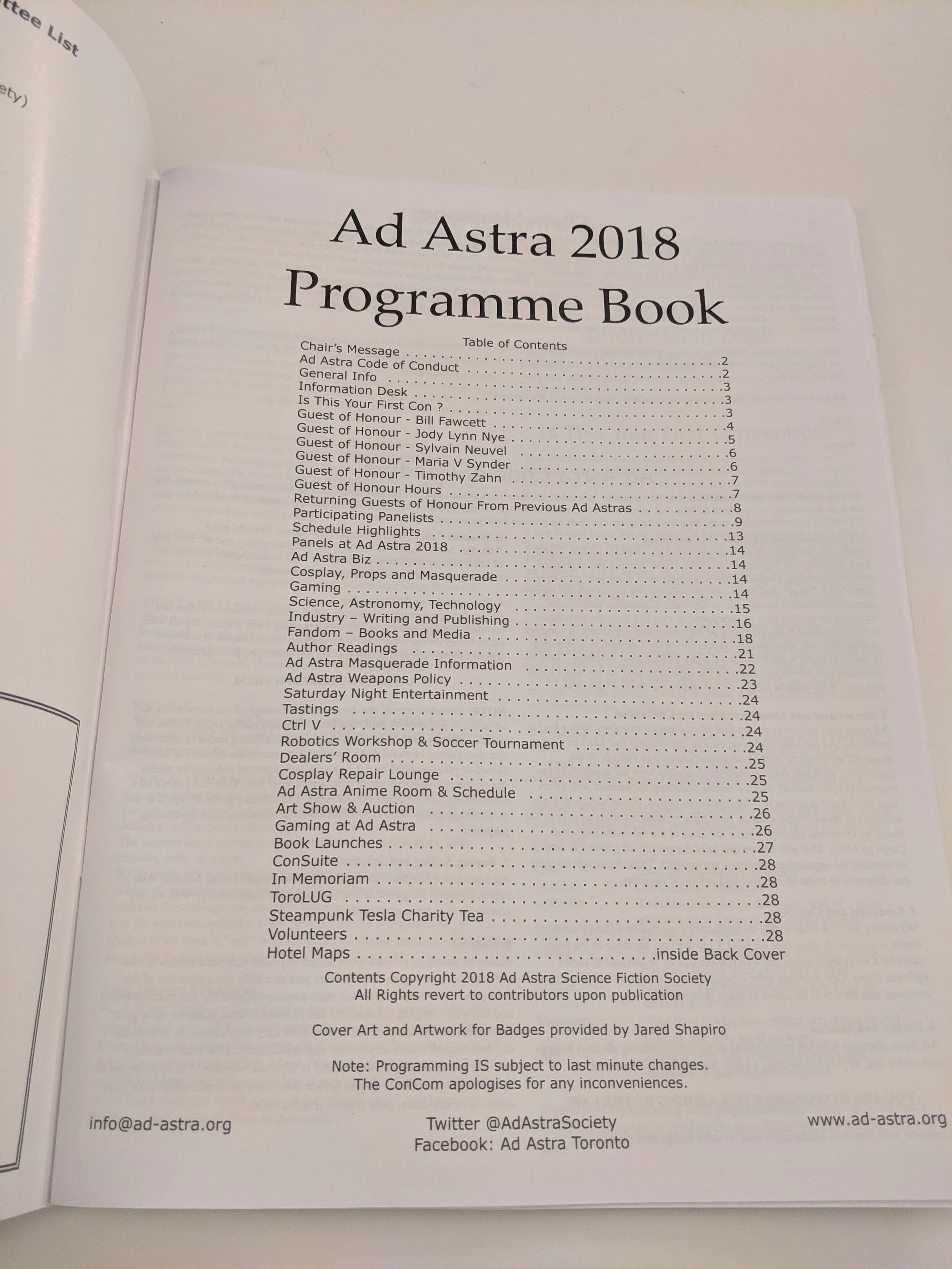
ID badges and badge ribbons—a staple of every convention. The best way to remember someone’s name is to look down at the badge hanging around their neck. Pick these up at registration on your way in and keep them on for the rest of the conference. They serve as both your identifier and as your pass into the panels and events.
Badge ribbons, or just ribbons, are pieces of flare handed out by the con itself or attendees looking to promote or celebrate something. They come with adhesive tape attached, allowing you to stack them below your badge. At big cons, such as WorldCon, some people end up with ribbons trailing all the way down to the floor.
Con Suites
A con suite is typically a large hotel room which has been set aside for the comfort of attendees. The suite will usually be stocked with complimentary snacks and refreshments. It’s a great place to unwind, recharge, and forge new friends and connections.
Business Cards
This is a bit of a strange addition to the list, but when I think of cons, I think of business cards. It seems like everyone has a card at cons. Authors, both indie and traditionally published, have cards. Publishers, agents, and editors have cards. If you’re talking to people about writing, you’ll inevitably end up with a stack of them. Do you, yourself need to have a card? Probably not. But--as appears to be the prevailing wisdom--it can’t hurt.
Ceremonies and Awards
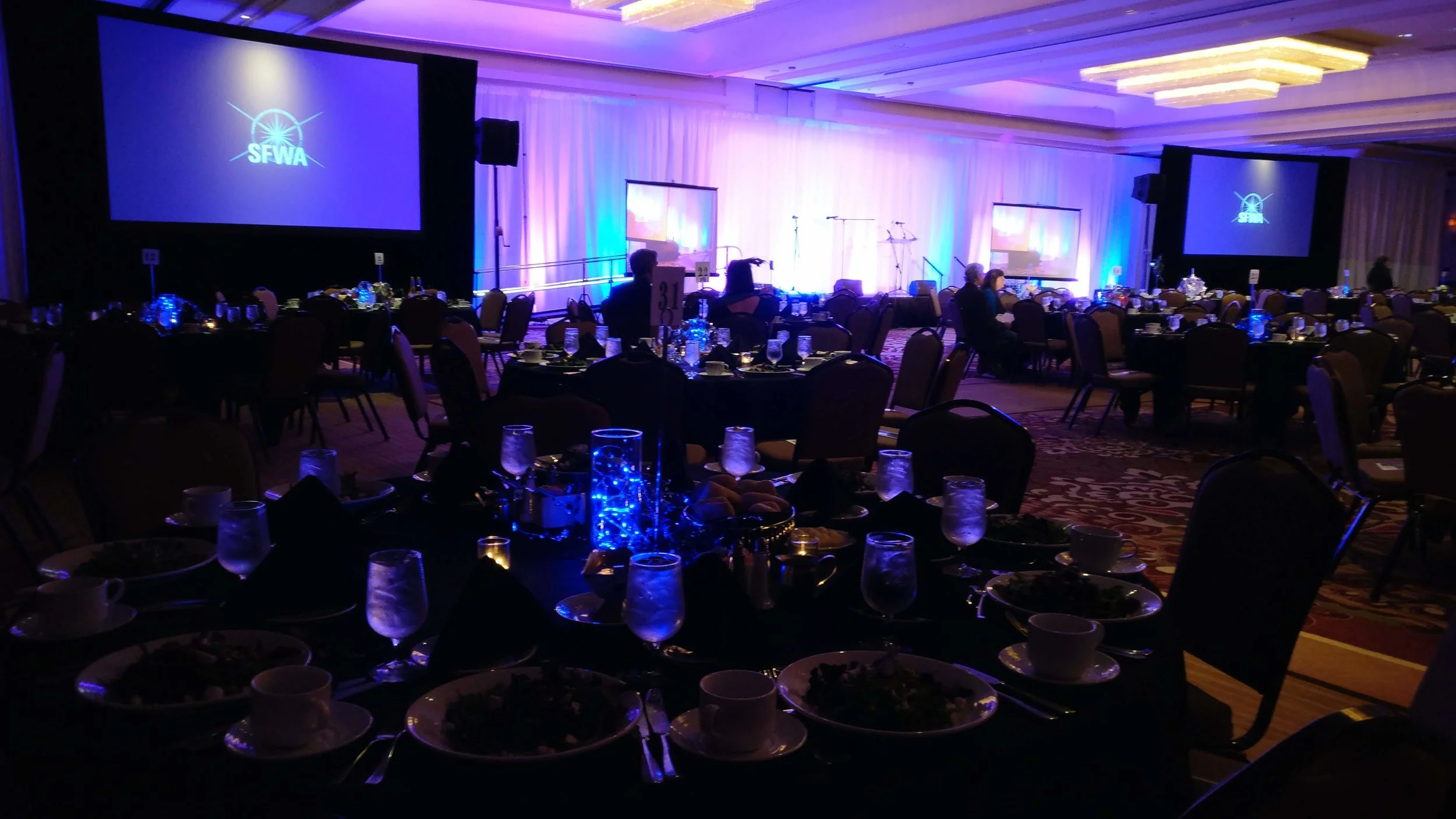
Conventions usually have some type of award associated with them. Smaller regional cons will have titles to bestow, such as the Grand Master of the convention, while big conventions may host publicly broadcast awards, like WorldCon and the Hugos.
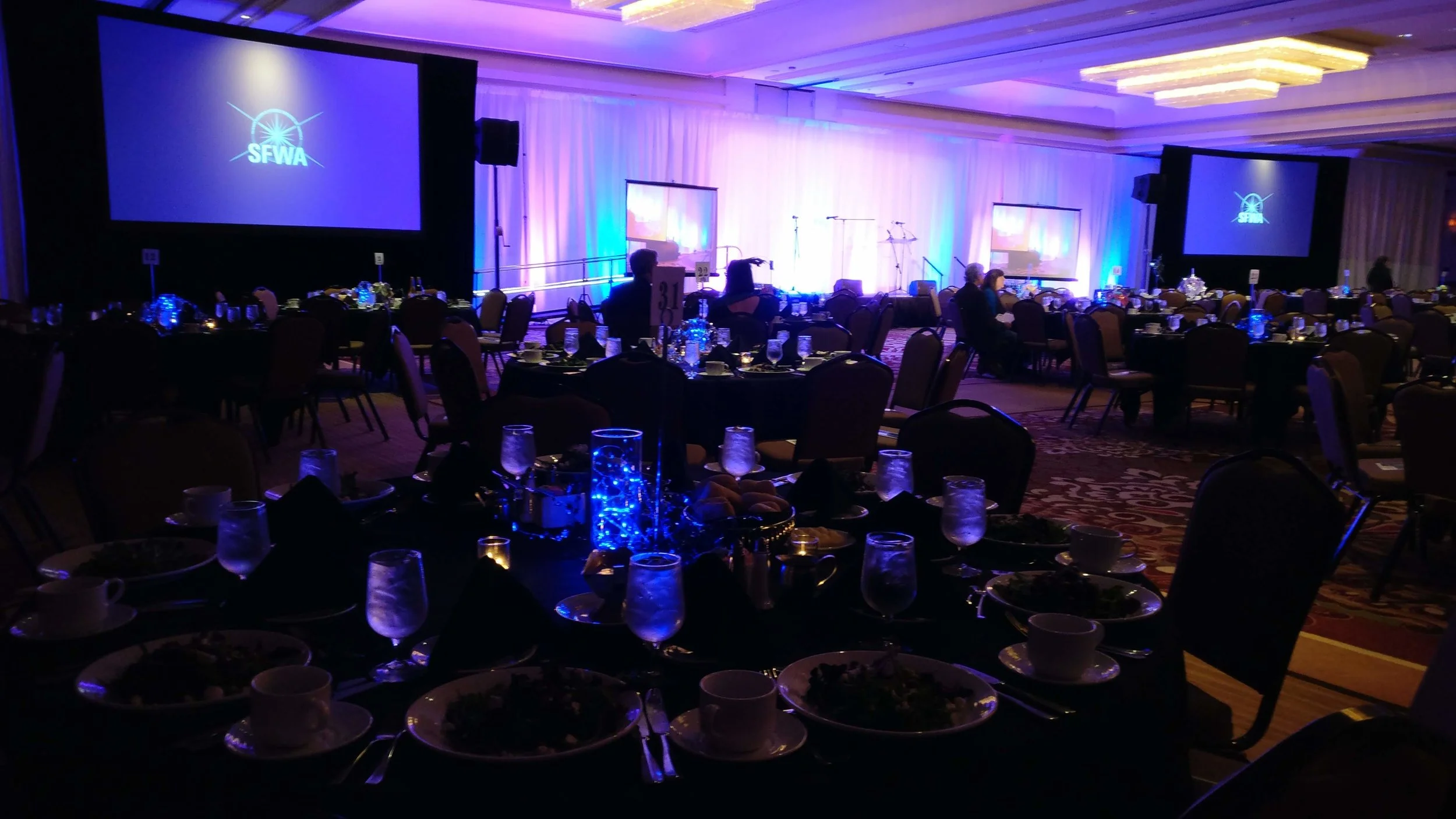
2019 Nebula Awards in Los Angeles
Bar Con
Bar Con is the term used to refer to the time spent at the hotel bar. After the panels and events of the day have wound down (and often long before that) people flock to the bar to have a drink, reconnect with old friends, and meet new ones.
Mass Signings
Cons often include a mass signing, where the professional creators are gathered to sign autographs for attendees of the convention and often for the public as well. It’s a great opportunity to get a book signed and--if you’re lucky--take a picture with one of your favorite authors.
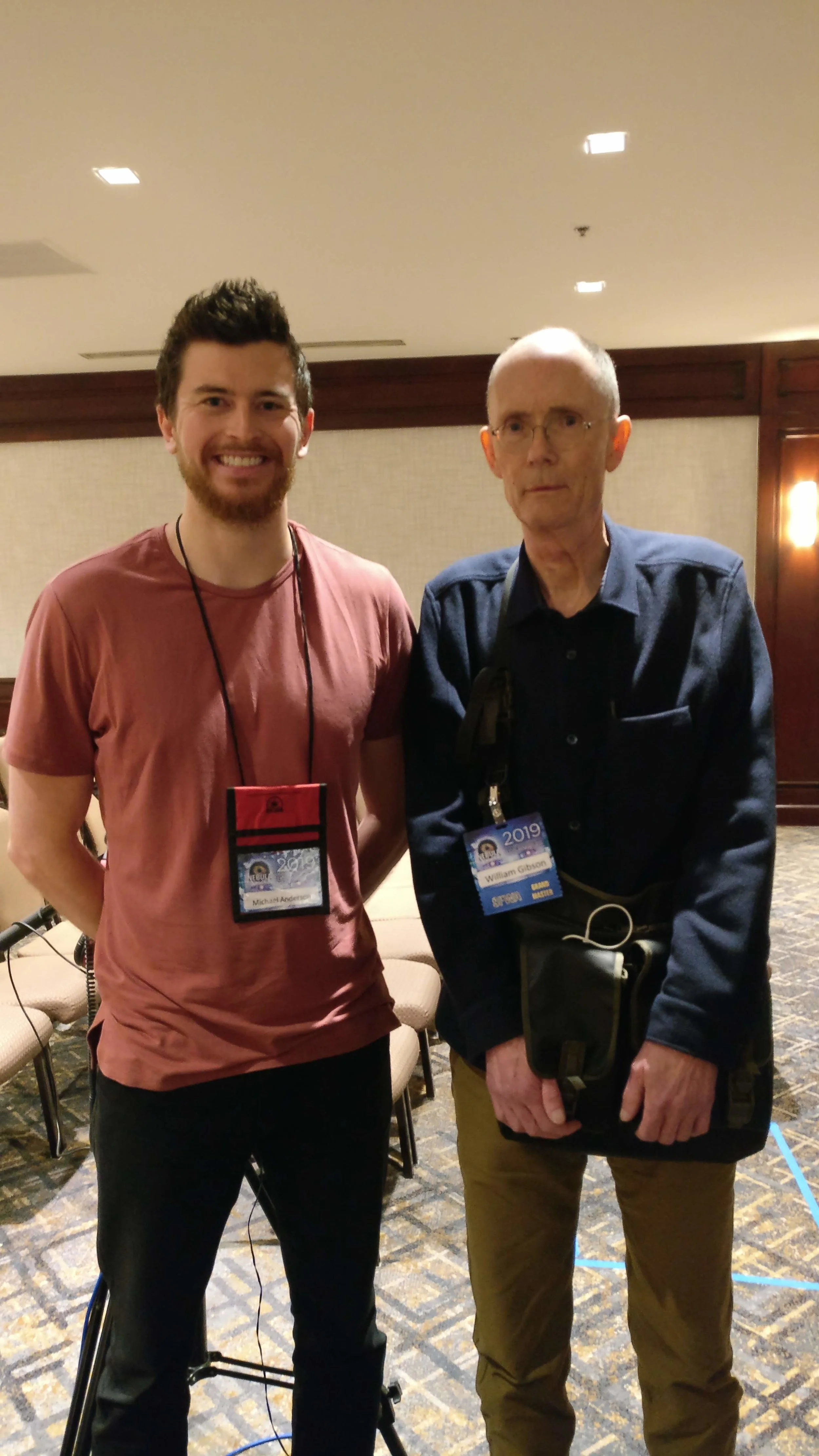
Some dope and William Gibson
What else?
There is so much more to conventions than the above. I’ll be following up with posts detailing the benefits and barriers to attending cons, the different types of cons, and which cons you should attend first.
Here is the next post in the series: Cons: Where to Start